
Rocket.Chat
Self-hostable team chat with a free Community edition, a free Starter plan for up to 50 users, and paid plans.
Our verdict
What it does well
- Community edition is MIT-licensed and free to self-host
- Free Starter plan covers up to 50 users with unlimited push notifications
- Runs on-premises, in a private or secure cloud, or air-gapped
Where it falls short
- Paid plan prices are not published; you must ask sales
- Community: up to 100 concurrent users and 10,000 push notifications a month
- Files under the ee folders need a paid Rocket.Chat licence in production
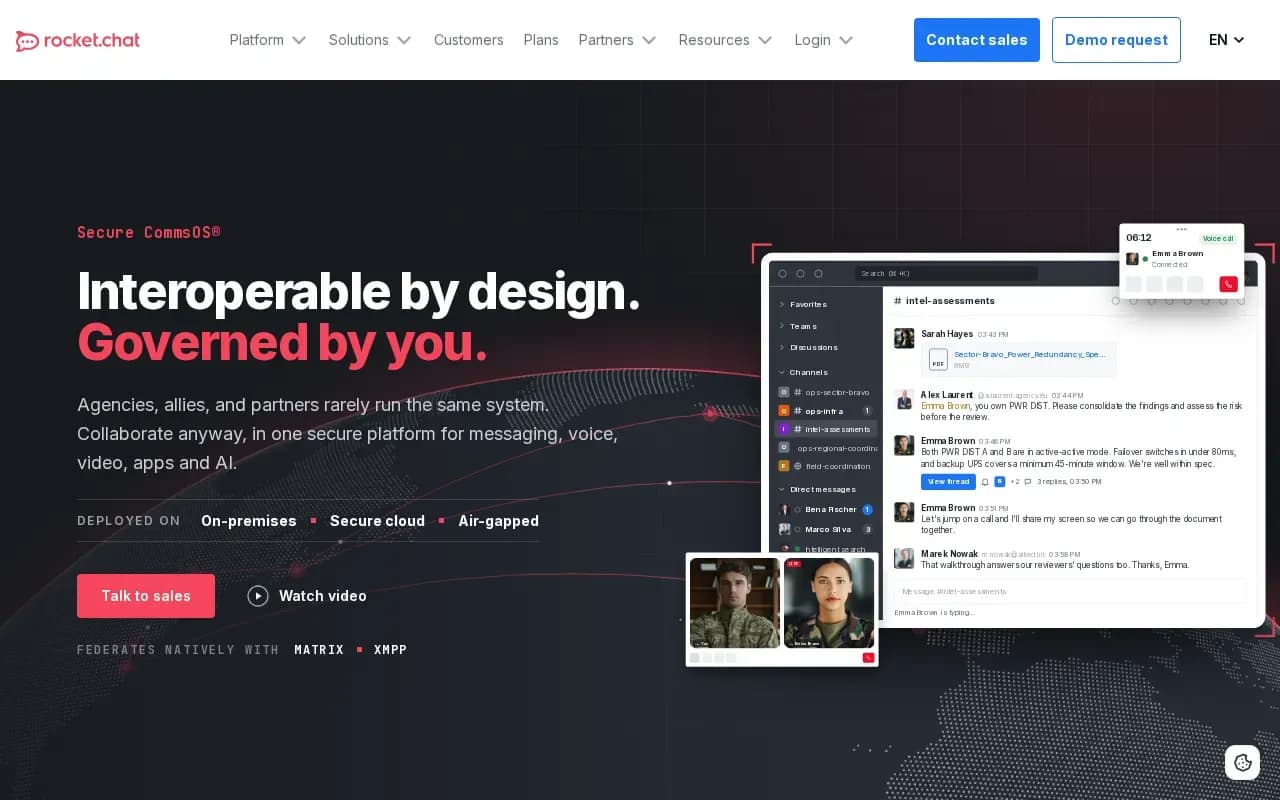
Rocket.Chat is a communications platform with messaging, voice, video, and screen and file sharing. Its site focuses on defense, government and critical-infrastructure users, and lists on-premises, secure cloud (including an EU-hosted cloud) and air-gapped deployment. It also lists Matrix and XMPP federation, REST APIs and SDKs, and AI features that work with OpenAI-compatible models.
The repository is split by licence. Code outside the ee directories is MIT-licensed; code under apps/meteor/ee and ee is under the Rocket.Chat Enterprise Edition licence, which allows production use only with a Rocket.Chat subscription. That makes it open core. Apps exist for iOS and Android, and for desktop on macOS, Windows and Linux.
The docs list a Community edition (self-hosted, up to 100 concurrent users, up to 10,000 push notifications a month), a Starter plan (free, self-managed, up to 50 users, no paid support) and Commercial, Government and Defense plans with custom pricing. The pricing page shows no dollar prices for the paid plans.
Rocket.Chat compared
Alternatives to Rocket.Chat
Workplace messaging with channels, huddles, workflows, search and AI features for teams.
- Freemium
What users say
Write a reviewNo user reviews yet. If you’ve used Rocket.Chat, share what you used it for and how it went.
Last updated 16 October 2026. Facts checked against the official site on 16 October 2026. How we make money