
Syncthing
Open-source continuous file sync between your own devices, with no central server.
Our verdict
What it does well
- Open source (MPL-2.0); no account or vendor server needed
- Traffic is TLS-encrypted and devices connect only if you approve them
- Downloads for Linux, Windows, macOS, FreeBSD, OpenBSD and more
Where it falls short
- No official iOS app is planned, per the project's FAQ
- Not a backup tool: changes and deletions propagate to all devices
- No Android app is listed on the official downloads page
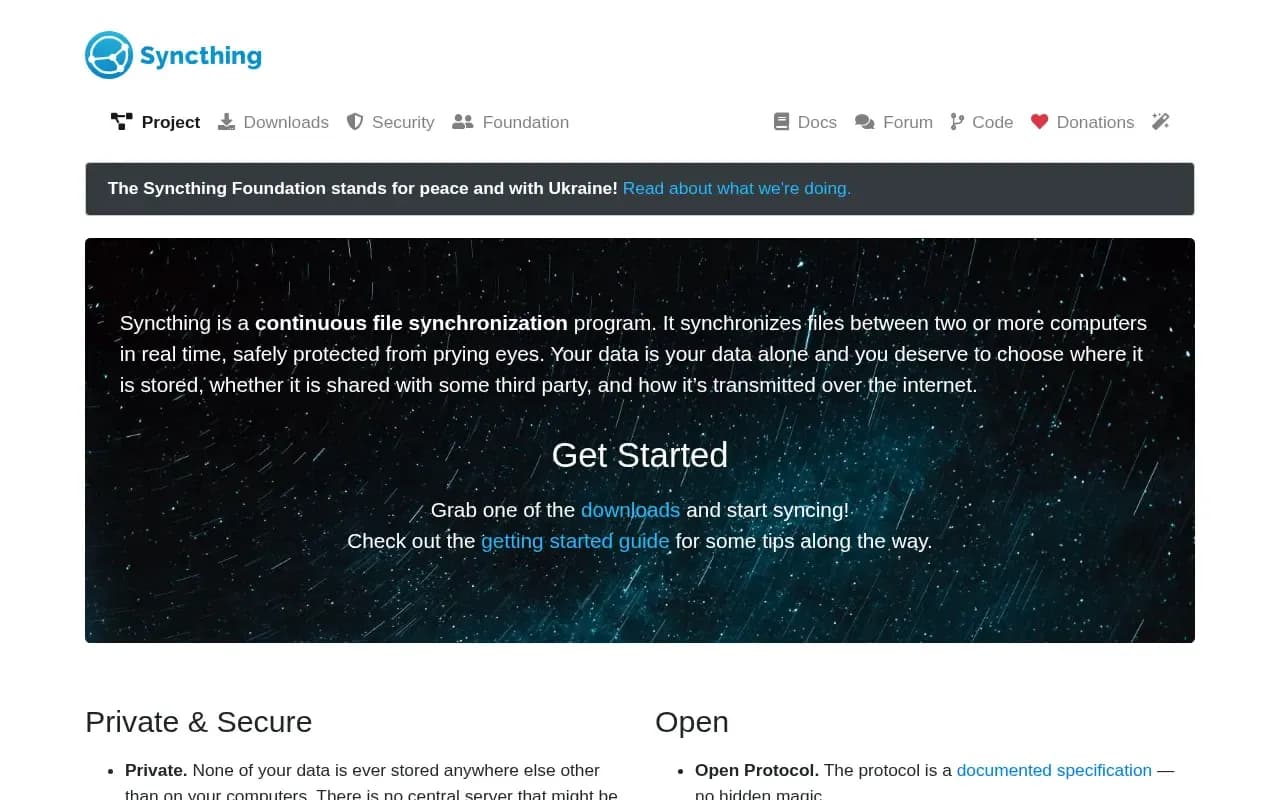
Syncthing is a continuous file synchronisation program that syncs files between two or more computers. Its homepage says none of your data is stored anywhere other than on your own computers, and that all communication uses TLS. Each device is identified by a cryptographic certificate, and only devices you explicitly allow can connect.
It is managed through a browser-based interface and the project publishes builds for Linux, Windows, macOS, FreeBSD, OpenBSD, NetBSD and illumos. The project's FAQ says it does not plan to officially support iOS, and the downloads page lists no Android app. Relay servers run by volunteers can carry traffic when devices cannot connect directly.
Syncthing has no price or plans: the source is MPL-2.0 licensed and the site links to a donations page. Commercial support is offered by a separate company, Kastelo, which the homepage says sponsors development.
Syncthing compared
Alternatives to Syncthing

Cloud storage and file sharing with sync apps, a free 2 GB plan and paid plans from $9.99 a month.
- Freemium
What users say
Write a reviewNo user reviews yet. If you’ve used Syncthing, share what you used it for and how it went.
Last updated 17 October 2026. Facts checked against the official site on 16 October 2026. How we make money