
Signal
A free messaging app from a nonprofit for texts, voice and video calls, using the Signal Protocol for encryption.
Our verdict
What it does well
- Free to use; run by a nonprofit funded by grants and donations, per Signal
- Client and server code are AGPL-3.0 on GitHub
- Apps for Android, iPhone/iPad, Windows, Mac and Linux
Where it falls short
- Needs a phone number to create an account, per Signal's terms
- Desktop app must be linked to Signal installed on your phone
- No paid plan to fund extra features; the project relies on donations and grants
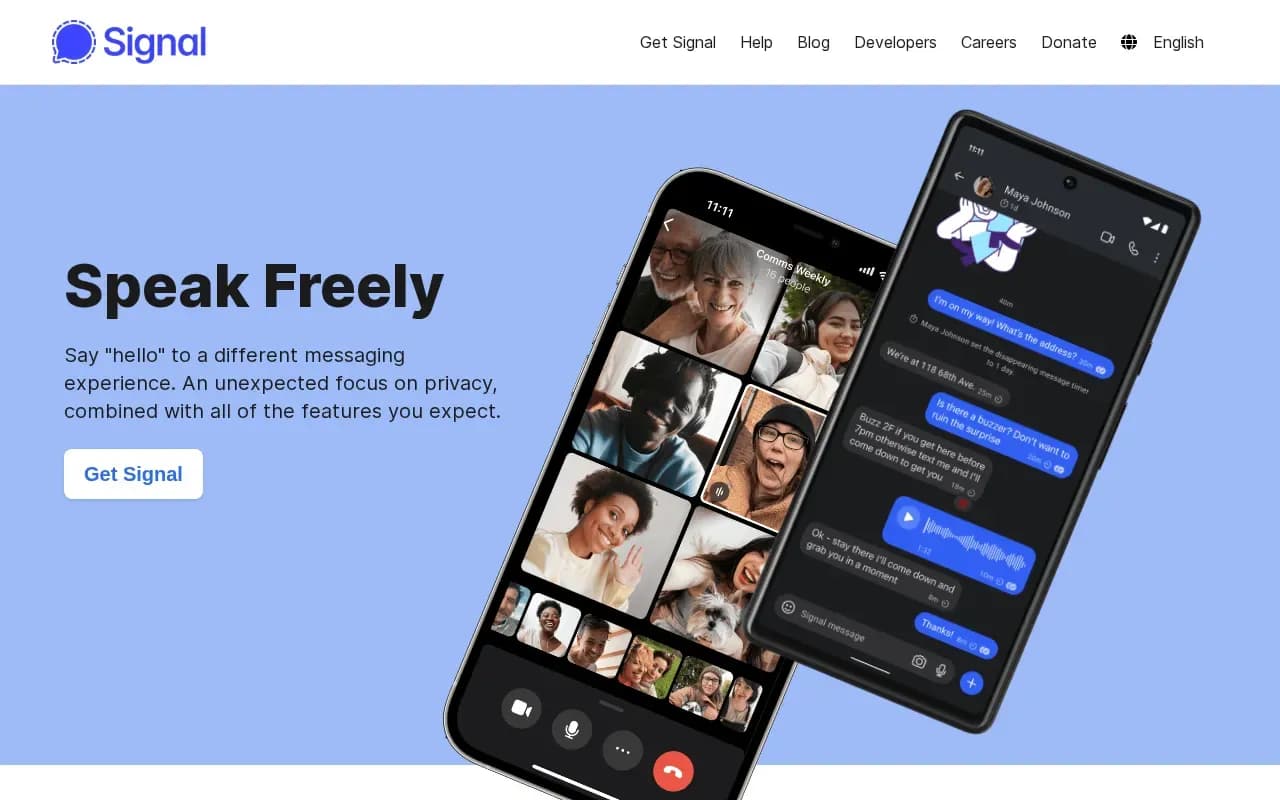
Signal calls itself an independent nonprofit and says it is a simple, powerful and secure messenger for text, voice and video. Signal says end-to-end encryption powered by the open-source Signal Protocol keeps conversations secure, and that "we can't read your messages or listen to your calls, and no one else can either." These are Signal's own statements.
Signal's privacy policy says you register with a phone number; messages waiting for an offline device are queued on its servers; message history stays on your devices; profile name and picture are optional and end-to-end encrypted; and some technical data such as authentication tokens and keys is stored on its servers. Hashed contact information is sent to the server if you use contact discovery.
Signal is free. It says development is funded by grants and donations. Android and iOS come from Google Play and the App Store; desktop apps are a direct download for Mac, a direct download or Microsoft Store for Windows, and an apt repository or AppImage for 64-bit Debian-based Linux. The desktop app requires Signal to be installed on your phone first.
What users say
Write a reviewNo user reviews yet. If you’ve used Signal, share what you used it for and how it went.
Last updated 17 October 2026. Facts checked against the official site on 17 October 2026. How we make money